Alpaca wool comes from the fleece of the alpaca and wears differently from sheep wool: it is light for the warmth it gives, and it has none of the lanolin grease that bothers some skin. Here it covers slouchy beanies and fingerless gloves, some knit in pure alpaca, others in a baby alpaca blend with polyamide and wool that adds spring and helps the knit keep its shape. Treat every piece gently: cold water, hand washing only and a flat dry.
-
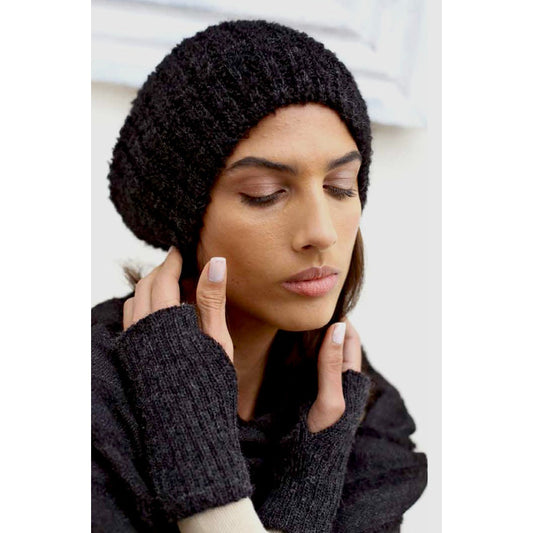
Alpaca Beanie in Black Plush Loop Knit
Vendor:AllpaRegular price $65.95 USDRegular price -
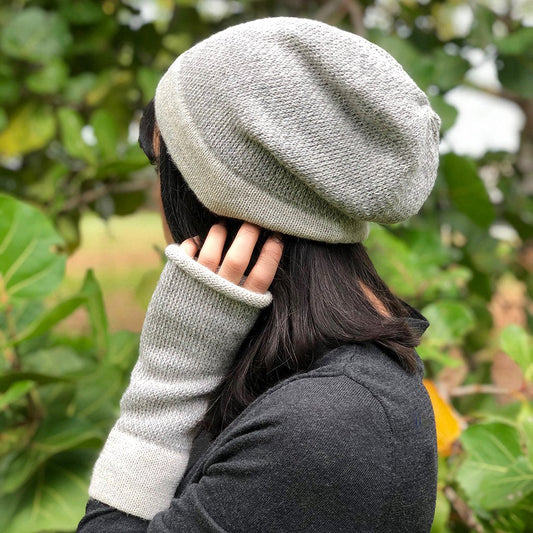
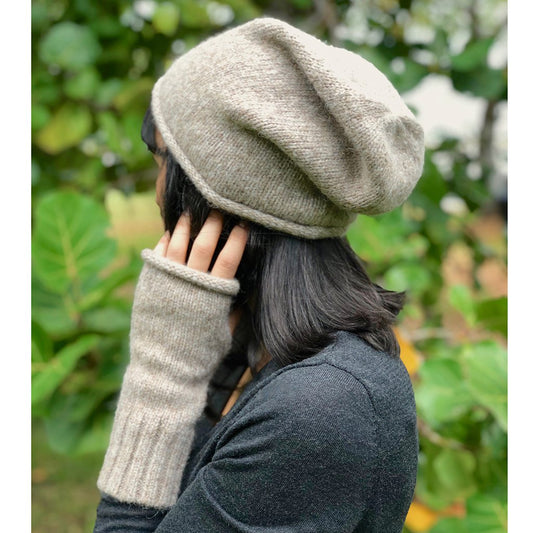
Alpaca Fingerless Gloves in Gray Two-Tone Knit with Contrast Cuff
Vendor:AllpaRegular price $67.95 USDRegular price -
Alpaca Hat in Gray Two-Tone Knit with Contrast Brim
Vendor:AllpaRegular price $67.95 USDRegular price -
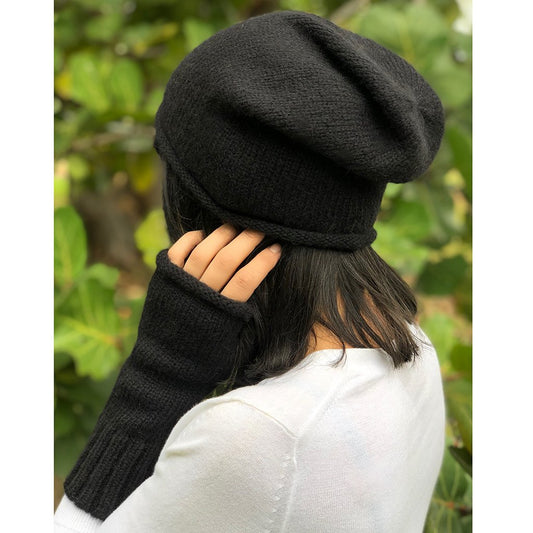
Black Fingerless Gloves in Baby Alpaca Blend with a Ribbed Cuff
Vendor:AllpaRegular price $67.95 USDRegular price -
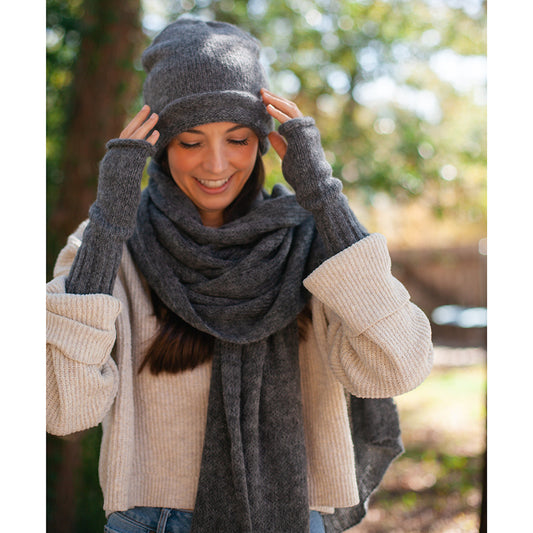
Charcoal Beanie in Dark Gray Baby Alpaca Blend, Slouchy Fit
Vendor:AllpaRegular price $67.95 USDRegular price -
Fingerless Gloves for Women in Oatmeal Beige Alpaca Blend
Vendor:AllpaRegular price $67.95 USDRegular price -
Gray Beanie in a Slouchy Baby Alpaca Blend Knit
Vendor:AllpaRegular price $67.95 USDRegular price -
Knit Beanie in Black Baby Alpaca Blend with Rolled Brim
Vendor:AllpaRegular price $67.95 USDRegular price -
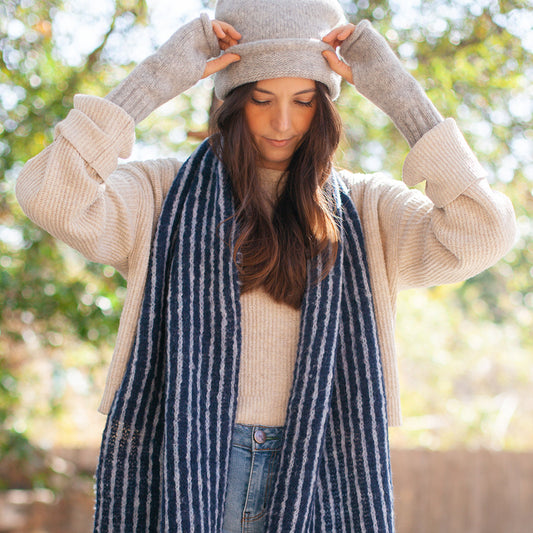
Slouchy Beanie in Beige Baby Alpaca Blend
Vendor:AllpaRegular price $66.95 USDRegular price -
Wrist Warmers in Gray Baby Alpaca Blend with a Thumb Slit
Vendor:AllpaRegular price $67.95 USDRegular price











Guides for Accessories
View all-

How to Choose a Leather Desk Pad That Fits Your Desk
Measure the mouse sweep before the desk. Which size, why leather for a workday desk, what OSHA says about wrist rests, and a size chart that fits on a phone.
How to Choose a Leather Desk Pad That Fits Your Desk
Measure the mouse sweep before the desk. Which size, why leather for a workday desk, what OSHA says about wrist rests, and a size chart that fits on a phone.
-

What Goes in a Dopp Kit, and What Stays Home
Seven items cover a week anywhere with a shower. The full dopp kit list in four groups, the airport rule that decides half of it, and the edit after every...
What Goes in a Dopp Kit, and What Stays Home
Seven items cover a week anywhere with a shower. The full dopp kit list in four groups, the airport rule that decides half of it, and the edit after every...
-

How to Pack Jewelry for Travel Without Tangles or Loss
Chains knot in the first hour and rings vanish before sunscreen. Where jewelry flies, how each piece is packed, and the five things a travel case has to do.
How to Pack Jewelry for Travel Without Tangles or Loss
Chains knot in the first hour and rings vanish before sunscreen. Where jewelry flies, how each piece is packed, and the five things a travel case has to do.
-

How to Measure Your Belt Size at Home
Two belts can carry the same size and fasten differently. Find the measurement detail to check before you choose, plus the shortcut that needs a second look.
How to Measure Your Belt Size at Home
Two belts can carry the same size and fasten differently. Find the measurement detail to check before you choose, plus the shortcut that needs a second look.


