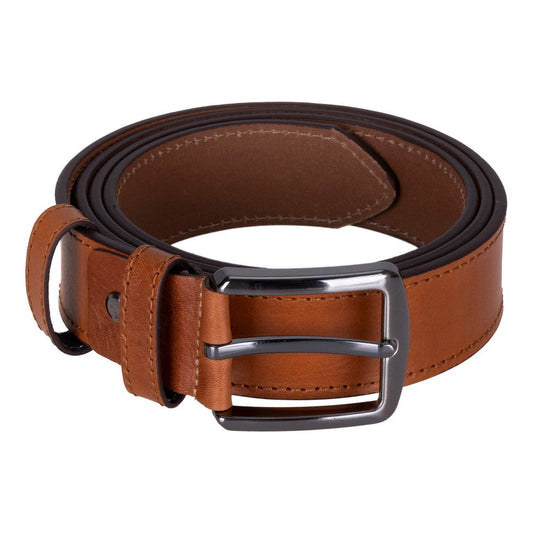
Two belts can carry the same size and fasten differently. Find the measurement detail to check before you choose, plus the shortcut that needs a second look.
1266 words,
6 minutes read time.
Last edited .
A belt can look right on the hanger and still leave you choosing between two uncomfortable holes. The useful number is the one that describes how it fastens on you, interpreted through the sizing instructions for that particular belt. Your pants label can offer a starting point, but it cannot settle the purchase by itself. This guide explains how to measure a belt you wear, how to measure where a new one will sit, and when the familiar add-two rule needs a closer look.
Measure the belt you already own
Choose a belt that feels comfortable with the kind of outfit you are buying for. Lay it flat without pulling the strap, and identify the hole you actually use. For a maker that measures from the leather fold beside the buckle, place the tape at that fold and read the distance to your chosen hole. Write down both the measurement and the starting point so you can compare like with like.
Match your measurement to the maker's method before choosing a size. In its belt measuring instructions, Proper Cloth specifically notes that other makers may include the buckle. This is why a useful measurement is more precise than a general instruction to buy your usual belt size. A different buckle reference can change the number without changing your body.
Do not automatically substitute the center hole for your everyday hole. Do not measure to the strap tip unless the listing specifically requests total length. Hole spacing, buckle length, and the tail beyond the fastening holes vary. When comparing the belts collection, look for a stated fit range or measurement diagram rather than subtracting a fixed allowance from the overall length.
Measure where the new belt will sit
Without a suitable belt to copy, put on the pants and layers you plan to wear. Pass a flexible measuring tape through the belt loops, keeping it flat. Stand naturally and record a comfortable measurement without pulling the tape tight or deliberately changing your posture. Then use the product's own size chart. This measures the intended wearing position; it does not automatically prescribe a universal labeled size.
The Dents belt size guide also bases its body measurement on the height where the belt will be worn and then directs shoppers to its chart. Follow the rounding or between-size instructions provided for the belt you are considering. A recommendation to round up for one range should not become a rule for every brand.
Check the tape's position before you put it away. If the belt will hold low-rise jeans, a measurement taken high over a dress answers a different question. You can keep separate notes for the outfits you use most, including where you measured and whether a shirt was tucked in. That small record is more useful for a later purchase than an unexplained number saved on your phone.
No tape measure or spare belt?
A nonstretch piece of string and a ruler can help you take the same wearing-position measurement. Place the string where the belt will sit, mark the meeting point, then lay it beside the ruler without stretching it. Repeat the measurement to check that the mark and the position are consistent. Compare the result with the seller's instructions before ordering.
Measuring the waistband of pants laid flat is a less direct option. The shape of the waistband, how the fabric lies, and any stretch can affect the result. Doubling a flat width and then adding two inches is not a dependable replacement for measuring your intended fit. If the available tools leave you unsure between sizes, ask the seller for its measurement method instead of adding several estimates together.
Why a 36 belt may fit size 34 pants
Adding two to an inch-based pants size is a starting estimate, not a fit guarantee. Tom Taylor describes this approach as a rule of thumb in its belt sizing guide. Under that approach, someone wearing size 34 pants would consider a size 36 belt. It does not establish the actual circumference of every pair of pants labeled 34.
Pants sizing, rise, clothing layers, and belt construction can change what works. A size 36 belt is not automatically wrong for a person who describes their waist as 36 inches, either. First establish whether that number is a clothing label, a body measurement, or a measurement through the loops. Then find out what the belt maker's number represents. Those are separate pieces of information.
Read an add-two example correctly
The examples below show the arithmetic for inch-based pants labels when a maker recommends the add-two approach. They are illustrative calculations, not Aysire product specifications or measurements of a finished belt. The result still needs checking against the individual listing and your wearing-position measurement.
Illustrative pants-label-plus-two estimates, in inches
Pants waist label (in)
Estimated belt size label (in)
30
32
32
34
34
36
36
38
38
40
40
42
Method: add 2 to the pants label, following the rule-of-thumb approach discussed in Tom Taylor's guide above. Do not use this table for letter sizes, a waistband measured flat, or a belt sold by total strap length. For a 42-inch body measurement, measure at the intended belt position and consult the relevant fit range; do not automatically add two again.
Convert inches and centimeters without changing the method
One inch equals exactly 2.54 centimeters. A measured distance of 34 inches is therefore 86.36 cm, and 36 inches is 91.44 cm. These are unit conversions of the same distance, not promises that a belt labeled 85, 90, or 95 will match a particular inch-based size.
Use the same starting and ending points before converting. If two labels appear inconsistent, check the brand's chart and rounding convention. Neither centimeters nor inches are automatically the more accurate label. Keep the original measurement in your notes so you can return to it rather than repeatedly rounding converted values.
Choose fit for jeans, dresses, and layers
A belt worn over a dress may sit differently from one threaded through jeans. Measure each intended position with the clothing in place. There is no fixed difference between those measurements, and a single belt may or may not cover both comfortably. For letter-sized belts, read the stated measurement range instead of assuming the letter matches your clothing size.
When browsing accessories, keep belt fit separate from other strap sizing. A watch strap or bag strap has its own construction and adjustment system. The useful shared habit is reading the dimensions carefully, not applying one sizing formula to every accessory.
Check the fastening and width before buying
For a conventional belt with punched holes, a comfortable setting with adjustment available in both directions is a practical preference. It is not proof that every belt must close on its middle hole. Braided, ratchet, stretch, and tie belts can use different systems. Check the design before treating a hole-based method as applicable.
Look at the width as well as the length when comparing leather belts. Measure the loops on the pants you intend to wear, or compare with a belt that already passes through them easily. If you plan to reuse a removable buckle, check its compatible strap width and attachment too.
Leather can change with wear, but the amount and timing depend on the strap. Do not buy an uncomfortable fit on the assumption that it will stretch by a predictable hole or date. Our full-grain leather guide explains the material terminology; the size chart and construction details still govern the fit decision. Finish with a measurement you understand, a matching sizing method, and room to wear the belt comfortably.
Seven items cover a week anywhere with a shower. The full dopp kit list in four groups, the airport rule that decides half of it, and the edit after every...
Seven items cover a week anywhere with a shower. The full dopp kit list in four groups, the airport rule that decides half of it, and the edit after every...
Chains knot in the first hour and rings vanish before sunscreen. Where jewelry flies, how each piece is packed, and the five things a travel case has to do.
Chains knot in the first hour and rings vanish before sunscreen. Where jewelry flies, how each piece is packed, and the five things a travel case has to do.
Full-grain is not a grade, and top grain means two opposite things. What the words on a leather listing actually tell you, and the five checks that settle it.
Full-grain is not a grade, and top grain means two opposite things. What the words on a leather listing actually tell you, and the five checks that settle it.