What Full-Grain Leather Means, and What It Does Not
Aysire Editorial
Share
Full-grain is not a grade, and top grain means two opposite things. What the words on a leather listing actually tell you, and the five checks that settle it.
1375 words,
6 minutes read time.
Last edited .
Full-grain leather is the phrase every listing reaches for and almost none explains. It is not a grade, not a thickness, and not a promise about the animal. It is a statement about one thing: what was done to the surface of the hide after the hair came off. This guide sets out what the phrase means, what the neighboring phrases mean, how long the material lasts, what happens when it gets wet, and how to tell from a photograph and a price whether a listing is telling the truth.
What full-grain leather is made of
A hide has three layers: a thin outer skin, a thick middle layer of tightly woven collagen fibers, and a fatty underside. The outer skin and the fat are removed in the tannery, and the middle layer is what becomes leather. The very top of that middle layer, just under where the hair grew, has the densest fibers of the whole hide, and it carries the grain, the natural pattern of pores, wrinkles and marks. Full-grain leather is that top surface left exactly as it grew, with no sanding, buffing or embossing to change it.
The easiest proof is the pinholes. Look closely at a full-grain surface and you will see tiny dots scattered across it: the open hair follicles. As the leather maker Spinneybeck's type sheet puts it, the presence of those follicles shows a surface that has not been altered to conceal flaws. A pinhole is a hair follicle, and a hair follicle is proof that nobody sanded the truth off the hide.
Full grain vs top grain leather
This is where the vocabulary falls apart, and it is worth knowing why. Some tanneries use top grain to mean the whole top layer of the hide, which includes full grain as its best case. Others use top grain to mean leather whose natural surface was sanded away and replaced with a printed one. The same two words, opposite meanings, depending on who is talking. Top grain leather is a phrase with no fixed meaning, so the only question that matters is what was done to the surface.
The practical version: if a listing says top grain, ask whether the surface was corrected. Corrected grain means sanded and embossed with an artificial pattern, which gives a perfectly even look, a resistance to stains, and a surface that will never develop a patina because the part that would have developed it is gone. Full grain keeps the marks and keeps the ability to age. Neither is a lie; they are different products sold under a shared word.
What is full grain leather vs genuine leather
Genuine leather is the most misread phrase in the category, and the popular pyramid that ranks it third behind full grain and top grain is a story rather than a standard. In a listing, genuine leather is a compliance phrase: it tells you the material is leather rather than a plastic imitation, and nothing more. It can sit on a beautiful full-grain hide or on a split, the fibrous lower layer, sprayed and embossed to look like something better. Genuine leather means real leather of unstated kind, while full-grain leather names exactly which surface you are buying. Neither phrase, on its own, tells you the thickness, the tannage or the animal, which is why a good listing in any bags collection names the surface as well as the material.
Bonded leather sits below all of these and belongs in its own sentence: leather fibers ground up, mixed with a binder, and rolled onto a backing. It is leather in the way chipboard is wood. If the word bonded appears anywhere, the full-grain question is already answered.
Can full grain leather get wet
Yes. Leather is skin, and skin has been rained on since before tanneries existed. What full grain cannot do is dry fast or dry hot. Water opens the fibers; heat closes them stiff, which is why a wallet dried on a radiator cracks along its folds a month later. Blot with a cloth, let it dry at room temperature over a day, and condition lightly once it is dry so the oils the water carried away go back in.
Two honest warnings. Vegetable-tanned full grain, the pale natural kind, darkens where water touches it and keeps a faint tide line; that is the material recording its life, and it evens out with use. And a full-grain surface with no finish will spot on the first day and stop spotting after a month, once the surface has taken up oil from your hands. Full grain leather can get wet, but it must dry slowly and without heat, and it needs a little oil back afterwards.
What is the lifespan of full-grain leather
Decades, measured in the way that matters: the surface does not fail. A scratch on full grain can be rubbed out with a thumb, because the fiber underneath is the same fiber as the surface; a scratch on a corrected or coated surface exposes a different material underneath and stays. Edges wear before faces do, stitching goes before edges, and hardware goes before stitching, so a full-grain piece that fails almost always fails at a seam or a snap rather than in the leather. The patina, the darkening and softening and gentle shine that arrive over years, is not wear. It is the material improving, and it is the one thing no imitation can copy, because the imitation's surface is a print.
What is full grain leather good for
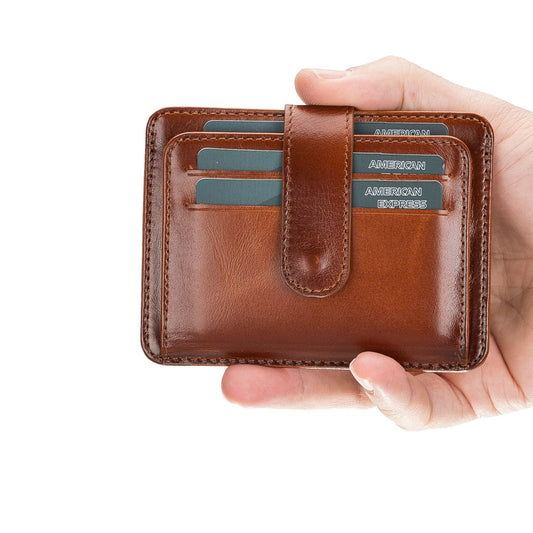
Anything that gets handled and flexed every day. A wallet lives in a pocket and is opened a thousand times a year; full grain takes that and softens into the shape of what it carries. A belt bends at the same point every morning; full grain creases there and holds, where a corrected surface cracks. A desk pad takes the heel of a hand for eight hours and, in full grain, records nothing but a gradual sheen. The leather wallets made in it are the easiest place to learn what the material does, because a wallet changes visibly in a season.
Where full grain is the wrong choice: anything that must look identical across a whole run, anything that will sit in the sun for years, and anything that has to survive a spill without a mark. Those jobs want a corrected or pigmented surface, and there is no shame in buying one for them.
How to tell full-grain leather in a listing
Five checks, in the order they cost you the least.
The words. Full grain, stated plainly, is a claim a seller can be held to. Genuine leather, real leather, leather without a qualifier, and top grain without an explanation are not.
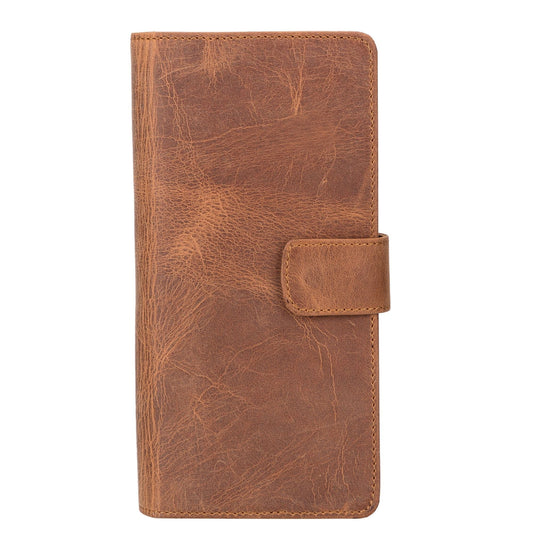
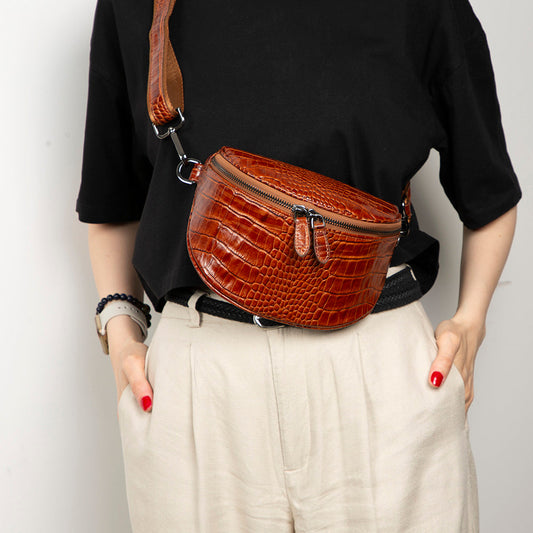
The surface in the photograph. Look for variation: pores that are not evenly spaced, a wrinkle, a healed scar, a slight difference in tone from one panel to the next. A perfectly even print is a print.
The edges. Full grain is usually finished with paint, wax or burnishing on a visibly solid edge. A raw edge that shows layers is a laminate or a bonded sheet.
The tannage, if it is named. Vegetable-tanned is the traditional slow method and almost always full grain; chrome-tanned is the common fast method and can be either.
The price. Full grain uses the fewest hides per square foot of finished leather, because nothing flawed can be hidden. A price that undercuts corrected grain by half is telling you something.
When the listing passes all five, the grain is the least of your worries, and the guide to vegan leather against real leather covers the other question that comes up before the purchase.
Which pieces to buy in full grain first
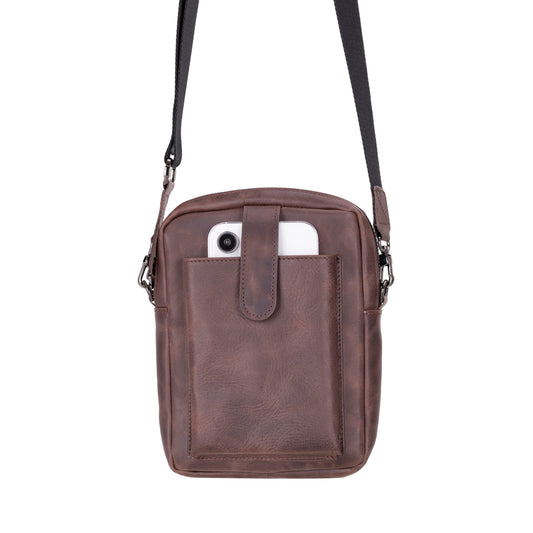
Start with the piece you touch most. For most people that is the wallet, then the belt, then the bag, in that order, because that is the order in which full grain pays you back: the wallet in months, the belt in a year, the bag over a decade. Read the surface before the color, read the edge before the hardware, and let the full-grain leather pieces earn the next purchase by how the first one looks a year from now.
A handbag is used more than almost any accessory yet often chosen with the least thought. This guide looks past first impressions to what actually determines how a bag holds...
A handbag is used more than almost any accessory yet often chosen with the least thought. This guide looks past first impressions to what actually determines how a bag holds...
Modern bags are designed to support everyday life through functionality, comfort, and timeless style. This guide explores how to choose versatile bags that deliver long term value and effortless daily...
Modern bags are designed to support everyday life through functionality, comfort, and timeless style. This guide explores how to choose versatile bags that deliver long term value and effortless daily...
Everyday bags explained through comfort, functionality, and style. Learn what makes a bag suitable for daily routines and how to choose designs that fit real life.
Everyday bags explained through comfort, functionality, and style. Learn what makes a bag suitable for daily routines and how to choose designs that fit real life.