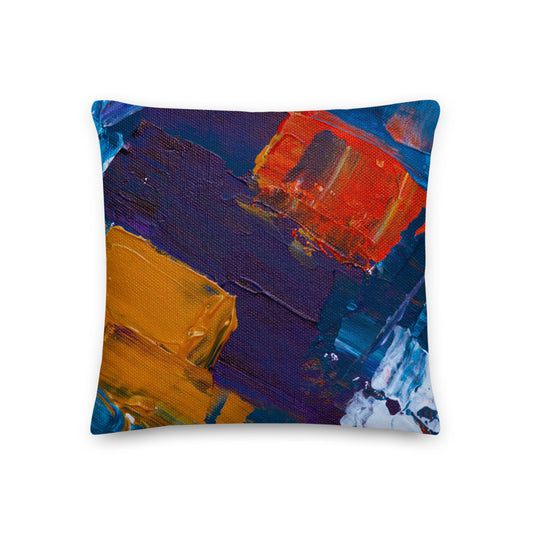
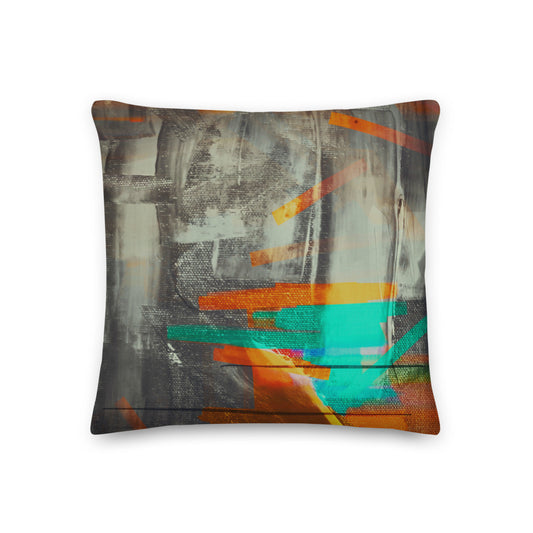
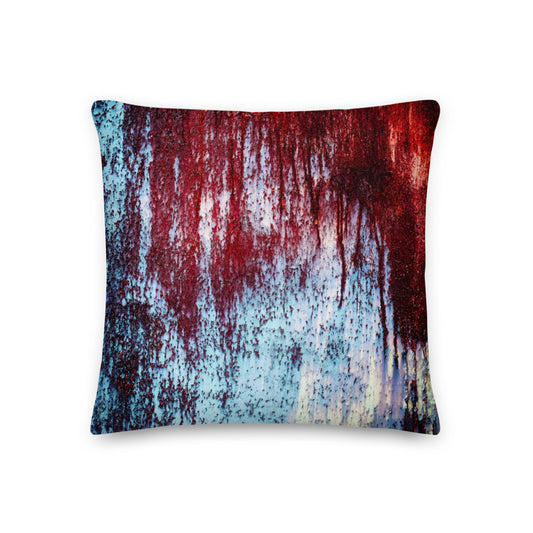
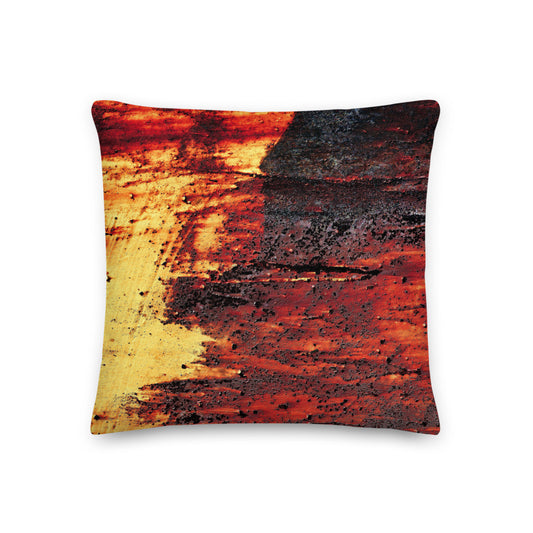
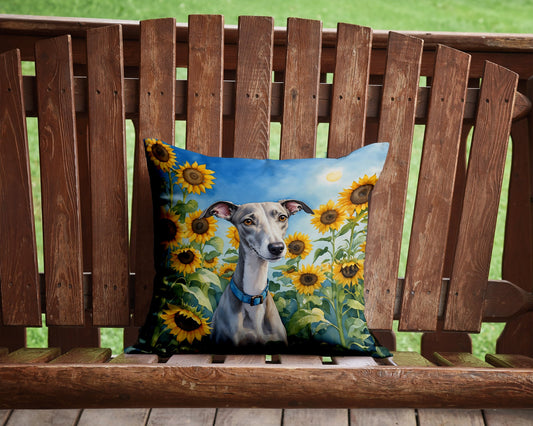
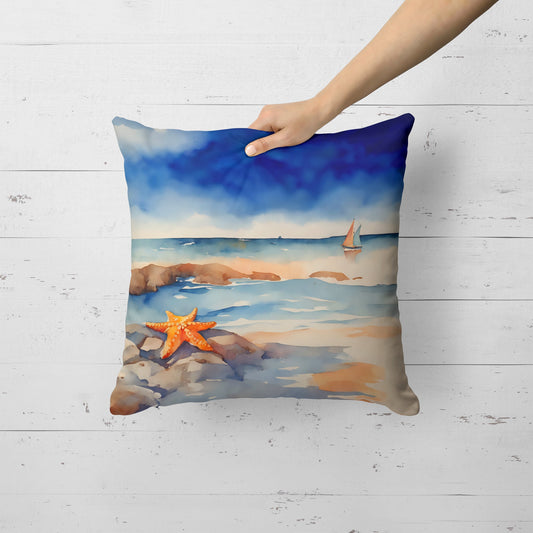
A pillow should earn its place when someone sits down. Compare square and lumbar shapes, check what comes in the package, and find a scale that works with your furniture.
1483 words,
7 minutes read time.
Last edited .
Keep the seats you use, then choose the pillows that belong on them. An 18-inch square is a useful starting point for comparing throw pillow sizes, while a low rectangular pillow can suit a chair whose back you want to leave visible. The deciding measurement is the space inside the furniture, followed by how far the filled pillow pushes you forward.
A sofa can look wonderfully arranged from the doorway and become an obstacle course when two people sit down. Start with the occupied version of the room. The goal is a pillow you reach for when settling in, with a shape and scale that look intentional when you get up.
Measure the seat you want to keep
Measure between the sofa arms, from the front of the back cushion to the seat edge, and from the seat to the top of the back. These are the usable width, seat depth, and visible back height. Overall furniture dimensions include arms and framing, so a sofa's advertised depth cannot tell you how much room remains behind your knees.
Next, sit where you normally sit. Notice whether you lean into an arm, stretch out along the cushions, or stay upright with both feet down. Put an existing pillow behind you and compare the remaining seat depth with the empty seat. That small rehearsal is more useful than choosing a square because it matches the sofa's number of cushions.
Choose throw pillow sizes around the seat you use, including the space taken up by the filling. When browsing decorative pillows, compare both the dimensions and the construction. Two pillows with the same face measurements can feel quite different if one collapses gently and the other stays rounded.
What is the standard size of a throw pillow?
An 18-by-18-inch square is a common reference size, but there is no single size that fits every sofa or chair. Treat “standard” as a browsing shortcut. The useful range includes smaller squares, larger squares, and rectangles, each doing a different job against the furniture's back and arms.
The following dimensions are examples to compare, not furniture fit guarantees or a list of everything sold in one collection. Make a paper outline if the numbers are hard to picture. Hold it against the seat back rather than laying it on the floor, where the scale can be misleading.
Face dimensions
Shape
What to test on your seat
14 x 14 inches
Small square
A compact accent beside an arm, with little height above it
16 x 16 inches
Square
A modest face on a chair or in front of a larger pillow
18 x 18 inches
Square
A starting point for checking sofa corners and visible back height
22 x 22 inches
Large square
A taller outline on deeper seating, checked while someone sits against it
12 x 20 inches
Horizontal rectangle
A lower band across the seat back without covering as much height
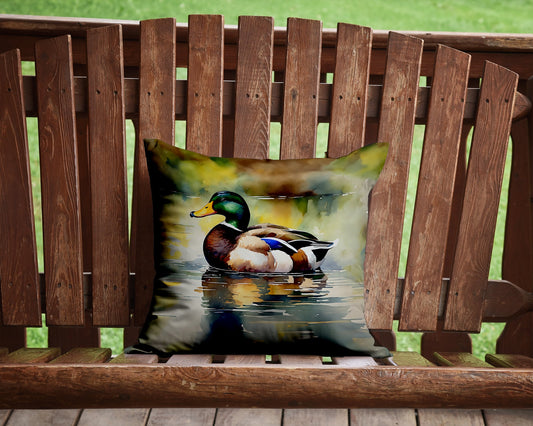
A rectangle may be listed as 20 x 12 rather than 12 x 20. Read the maker's width and height labels and look at the orientation of any artwork. Rotating a plain pillow is simple; rotating a bird or a landscape also rotates the scene.
What changes between a 16-inch and an 18-inch square?
The 18-inch version adds two inches in both directions. That sounds modest, but its nominal square face measures 324 square inches, compared with 256 for the 16-inch version. The difference is about 27 percent in flat area, calculated from the stated dimensions. It is not a calculation of filling volume or usable support.
This is why the larger pillow can look noticeably more substantial even when the size labels seem close. On a narrow chair, compare the outline against the arm openings. On a sofa, look at how much of the back cushion disappears behind it. Neither result is automatically preferable; you are choosing how much of the furniture and the pillow to show.
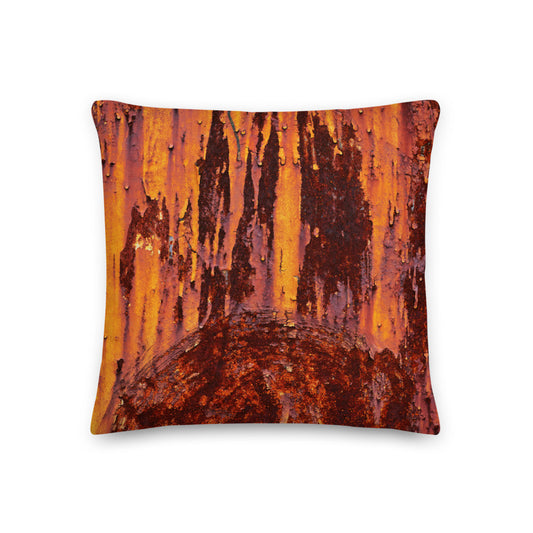
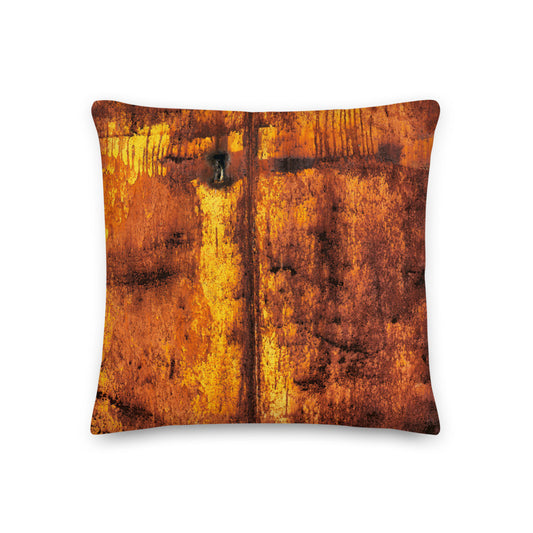
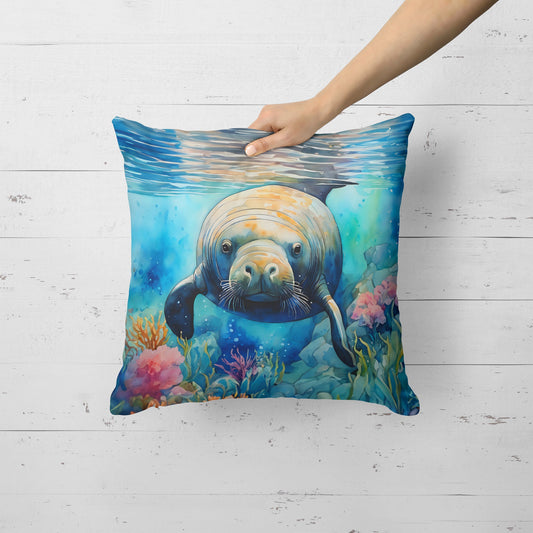
For a printed design, size also changes how much visual space the picture occupies. A small accent can sit beside the reader without dominating the chair, while a larger face gives the artwork more presence across the room. Compare the proportions of printed pillows after you have settled on the seat that will hold one.
Square or lumbar: let the back height decide
A square gives you height as well as width. A lumbar shape is a rectangle that can sit lower across the back of a seat. Here, “lumbar” describes the decorative pillow's shape; it does not establish a medical benefit or a particular firmness. Judge the feel by sitting against the filled pillow.
A low-backed sofa often looks clearer with a rectangle because more of its upper outline remains visible. A taller square can work when you want to soften the meeting point between an arm and the back. On a deep corner seat, the two shapes can be layered, provided that the person using the corner still has enough room.
Choose the main pillow first and test the smaller one second. Adding two at once makes it harder to tell which shape is improving the seat. If the rectangle is the one you keep pulling toward you, let that useful piece lead the arrangement rather than hiding it behind a decorative pile.
Can a 20x20 pillow fit in an 18x18 case?
A compressible 20-by-20-inch insert may fit an 18-by-18-inch cover when the cover maker recommends that pairing. It is not an automatic match. The fabric, opening, seam construction, fill, and intended fullness all matter. An already covered 20-inch pillow is also different from a loose insert meant to be put inside another case.
At Aysire, every decorative pillow comes with its fill. For a size decision, check which of two builds you are looking at: the water-resistant printed 14 x 14 and 18 x 18-inch pillows have sewn-in inserts, while the linen-look 18 x 18, 20 x 12, and 22 x 22-inch pillows have zippered cases over removable polyester inserts. If you are replacing a removable case, measure it flat between the seams, leaving piping or fringe out unless the maker includes it in the stated dimensions.
For Aysire pillows, choose by the finished size and how the insert is attached; fill is already included. A zipper tells you that the case opens, while a sewn-in insert stays with its printed face. As a construction example, Printful's pillow specification describes a removable polyester case and an included insert. Follow the listed dimensions for the pillow you choose.
Build the arrangement around occupied seats
Start with one pillow at each end of a sofa, then sit down with the people who normally share it. Add a third only if it has a place to stay while the sofa is being used. An odd number can be a styling choice, but the number of available seats is a better reason to stop or continue.
Here is a practical comparison: try two 18-inch squares at the ends, then exchange one for a 12-by-20-inch rectangle. Keep the arrangement that leaves the usual sitting positions comfortable. This is a trial layout, not a formula tied to a particular sofa width. On a sectional, repeat the test in the corner and on the chaise, where people use the cushions differently.
Test the pillow's destination when it moves, too. A large square that fits the sofa might be awkward on the nearby chair where you put it during a movie. The furniture and accents in Home & Decor are easier to coordinate when you have identified that second resting place as well as the first.
Give the finished arrangement a sit-down test
Use the pillows through an ordinary evening before deciding whether the group needs more. Read, turn sideways to talk, and stand up again. Notice which pillow stays in place and which one is repeatedly moved. A pillow that spends every evening on the floor is telling you something useful about its size, position, or filling.
Care also follows the build. Spot-clean the water-resistant printed pillow and plump its sewn-in fill by hand; do not put it in the washing machine. For a linen-look pillow, the zippered case can go in the machine while its removable polyester insert needs hand washing. Check the item's care instructions for the specifics. For a porch or another exposed setting, verify the maker's intended use rather than inferring it from the print.
Once the fit is settled, our living-space refresh guide can help connect the pillows with the rest of the room. Keep the measurement decision separate from the color decision, and each becomes easier to make.
The successful arrangement is the one that welcomes you back into the seat. Choose the outline that suits the furniture, the filling you enjoy leaning against, and a design you want to see every day. The sofa should look ready for company, with room for the company to sit.
Every room has a rhythm that drifts out of sync when the weather turns. Suddenly the space feels heavier or darker than it should, and the urge is to change...
Every room has a rhythm that drifts out of sync when the weather turns. Suddenly the space feels heavier or darker than it should, and the urge is to change...
Seven items cover a week anywhere with a shower. The full dopp kit list in four groups, the airport rule that decides half of it, and the edit after every...
Seven items cover a week anywhere with a shower. The full dopp kit list in four groups, the airport rule that decides half of it, and the edit after every...
A jar, a bottle, and a surprisingly personal decision. From a soft scoop to a subtle sheen, the details that make a moisturizer feel right are smaller than the label...
A jar, a bottle, and a surprisingly personal decision. From a soft scoop to a subtle sheen, the details that make a moisturizer feel right are smaller than the label...
Chains knot in the first hour and rings vanish before sunscreen. Where jewelry flies, how each piece is packed, and the five things a travel case has to do.
Chains knot in the first hour and rings vanish before sunscreen. Where jewelry flies, how each piece is packed, and the five things a travel case has to do.