Cat Carrier Size Starts With the Cat, Not the Label
Aysire Editorial
Share
The weight on the tag says it will hold your cat. It says nothing about whether your cat can turn around in it. A tape measure, a treat and two minutes settle that.
1349 words,
6 minutes read time.
Last edited .
Every cat has an opinion about the carrier. Most of those opinions are loud. But a surprising amount of the drama on vet day has nothing to do with the cat's personality and everything to do with a carrier that was chosen from a weight printed on a tag.
Here is the short version. A cat needs a carrier it can stand up in, turn around in and lie down in without folding itself like a croissant. Weight tells you whether the bag will hold. It does not tell you whether the cat will fit. For that you need a tape measure, a treat and about two minutes of your cat's patience.
What size cat carrier do you need?
Start with two numbers: your cat's length and your cat's height. The carrier's inside should be a little longer than the cat and tall enough for it to stand without ducking its head. A common rule of thumb from pet retailers is that a carrier should be no more than about one and a half times the size of the cat.
A cat carrier should be sized to your cat's length and height, because weight only tells you how much the bag can hold. Two cats of the same weight can need very different carriers. A long, lean cat needs floor. A compact, round one needs headroom.
Here is how the math plays out for a cat measuring 16 inches from nose to the base of the tail. A little longer than the cat means about 17 inches of interior length at minimum. One and a half times the cat is 16 times 1.5, or 24 inches, and that is roughly where roomy turns into rattly. So you are shopping for something with about 17 to 24 inches of usable length inside. Treat those figures as a starting point, not a guarantee.
Measure your cat in two minutes
Pick a moment when your cat is relaxed, ideally mid-stretch or loafing on the floor. Then:
Length. Measure from the tip of the nose to the base of the tail. Skip the tail itself, since it curls up happily inside.
Height. Measure from the floor to the top of the head while your cat is standing or sitting up tall.
Width. Measure across the shoulders, the widest part of most cats.
Write it down. Numbers you remember as "about a foot and a bit" have a way of growing or shrinking in the store.
If your cat refuses to hold still, measure a favorite bed they fill perfectly. It is a surprisingly good stand-in.
Shopping for a kitten? Size for the cat it is about to become. Kittens grow out of a snug carrier within months, so a carrier that looks a little generous today is usually the one you will still be using next year. A folded towel inside takes up the slack until then.
The size on the label is the outside
This is the part that catches almost everyone. Most carrier listings give the outside dimensions, and the walls, padding and frame all eat into the space your cat actually gets. A padded soft bag might lose an inch or two all around. A hard capsule loses its shell thickness, and a curved top means the full height only exists right in the middle.
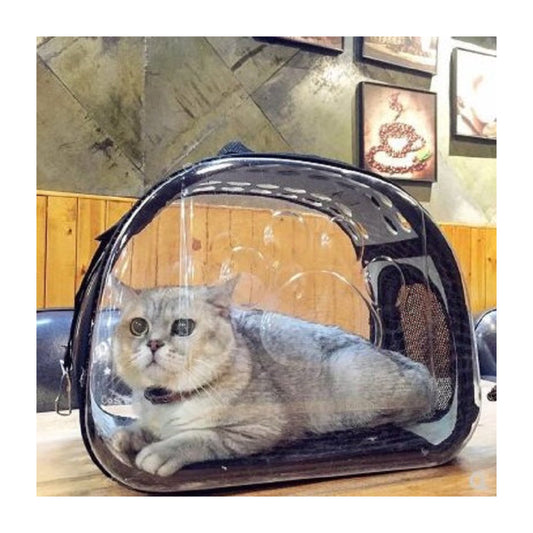
Domed windows are a lovely exception. On a bubble window carrier, the dome pushes outward and gives the cat a pocket of extra headroom right where it likes to look out. Just remember that the extra space lives at the window, not across the whole floor.
When in doubt, compare your cat's measurements with the listed size and keep a comfortable margin on every side.
Is 20 lbs considered a large cat?
Yes, 20 pounds is a big cat by any household standard, and it changes the shopping list in two ways.
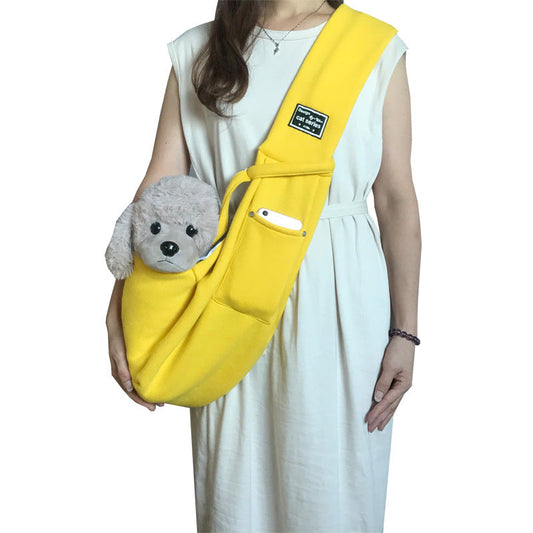
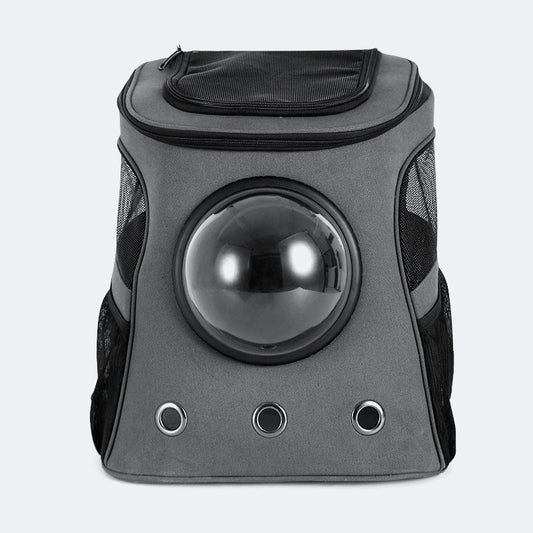
First, check the carrier's stated weight limit. Plenty of carriers are rated below that, and a limit is about the bag holding together, straps and seams included. Second, think about the person doing the carrying. Twenty pounds of cat plus the carrier on one arm gets heavy fast. A pet backpack carrier spreads that load across both shoulders, which is the difference between a pleasant walk to the clinic and a lopsided one.
And remember that a big cat is not always a long cat. A heavy, compact cat may fit a medium carrier nicely, while a lighter cat with long legs needs more room than the scale suggests. The tape measure wins every argument.
Do cats prefer hard or soft carriers?
Cats mostly prefer the carrier that is easy to get into and does not feel like a trap. The material matters less than the openings. The Cat Friendly Homes guide from feline veterinarians suggests carriers that open from the top and the front, or ones with a removable top half, so a cat can stay put while the vet examines it.
After that, each style has its own charm:
Soft-sided carriers give a little, tuck under seats more easily and often fold flat for storage.
Hard capsules hold their shape, wipe clean easily and usually come with a window your cat can watch the world through.
Top plus side openings are the real luxury. A cat that will not be lowered in from above will often walk in from the side.
Whichever you pick, look at the floor. Cat Friendly Homes also recommends a leak-proof bottom, and a removable, washable liner is the feature you will be most grateful for after a nervous trip. Accidents happen to the calmest cats, and a quick wash beats scrubbing seams.
Why too big is a problem too
It is tempting to buy the palace. Your cat deserves it, right? But in a moving car, extra space turns into sliding space, and a cat that skids from one end to the other every time you brake arrives more rattled than one tucked in snugly.
A good carrier feels like a cozy den, not an empty room. Snug enough to brace against, roomy enough to turn around. That is the sweet spot.
Where the carrier rides matters as much as its size. Cat Friendly Homes points to the Center for Pet Safety's advice that a carrier should be belted onto the back seat only if it has been crash-tested, and otherwise go on the floor. Good airflow matters in a car, too, which is where a ventilated carrier with mesh on more than one side earns its keep.
One more thing a bigger carrier cannot fix: two cats. Sharing a carrier on a stressful trip rarely goes well, even for cats that nap together at home. One cat per carrier keeps the peace.
Flying with your cat? Let the seat decide
If a plane is involved, the carrier has to fit under the seat in front of you, and each airline sets its own limits, sometimes different from one aircraft to the next. Check your airline's under-seat measurements before you buy the carrier, not after. Then make sure both your cat and the carrier fit within them.
Soft-sided carriers have an edge here because they can give a little when the space is tight. Whatever you choose, do a trial run at home: close the carrier with your cat inside, lift it, set it down and see how everyone feels about it.
Make it part of the furniture
The perfectly sized carrier still has one job left: becoming a place your cat does not mind. Leave it out in a spot your cat already likes, door open, with a soft blanket that smells like home and the occasional treat hidden inside. A cat that already curls up in one of our pet beds and tunnels is halfway there, because it already loves a snug hideaway.
Once you have your cat's numbers, browse the pet carriers collection with the tape measure close by. Pick the one that fits the cat first and your plans second, and vet day might just become the quietest errand of the month.
The internet's glass chart runs to twenty-seven shapes. Your shelf needs four, and one of the most famous shapes is quietly ruining the drink it was named for.
The internet's glass chart runs to twenty-seven shapes. Your shelf needs four, and one of the most famous shapes is quietly ruining the drink it was named for.
A long hem is only one clue. The detail that makes a midi work, and the fitting check worth doing before you decide, can change which outfit you choose.
A long hem is only one clue. The detail that makes a midi work, and the fitting check worth doing before you decide, can change which outfit you choose.