A self-leveling gel keeps flowing for a few seconds after the brush leaves it. Surface tension pulls the coat flat, brush strokes disappear on their own, and the finish is even before the lamp is switched on. That flow is the whole point of the format, and almost every complaint about it comes from the same flow going somewhere it should not.
Self-Leveling Gel
-
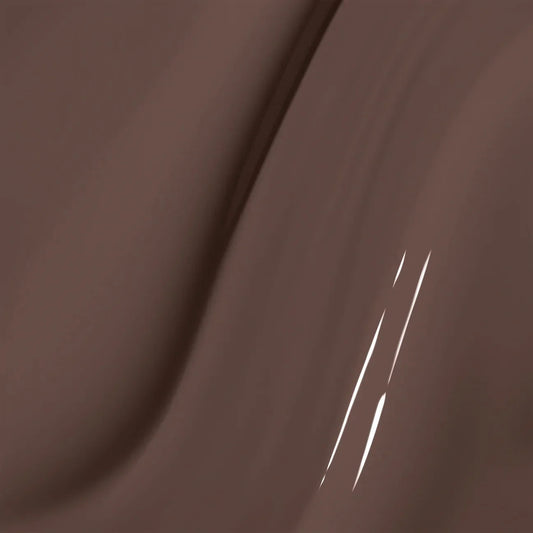
Apres Mother Earth 300 Taupe Gel Polish
Vendor:ApresRegular price $25.95 USDRegular priceSale price $25.95 USD -
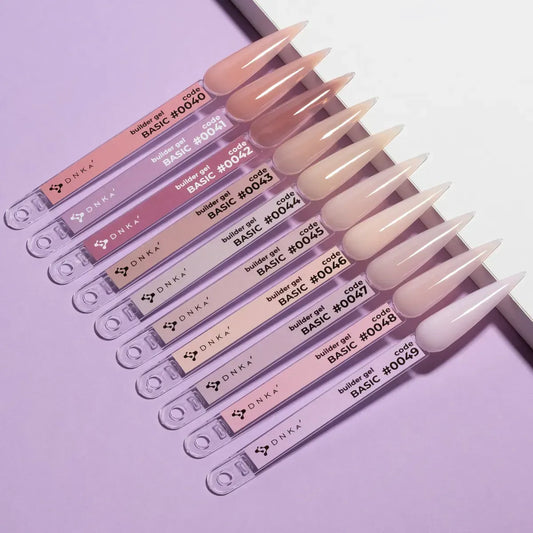
DNKa Builder Gel 0042 Nude Cover Medium Density
Vendor:DNKaRegular price From $27.95 USDRegular price$0.00 USDSale price From $27.95 USD -
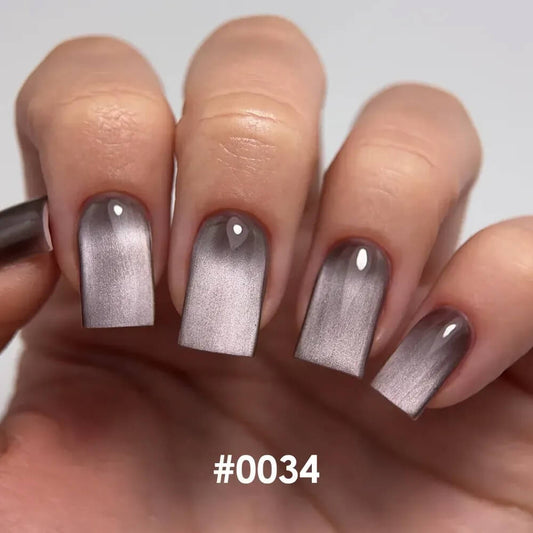
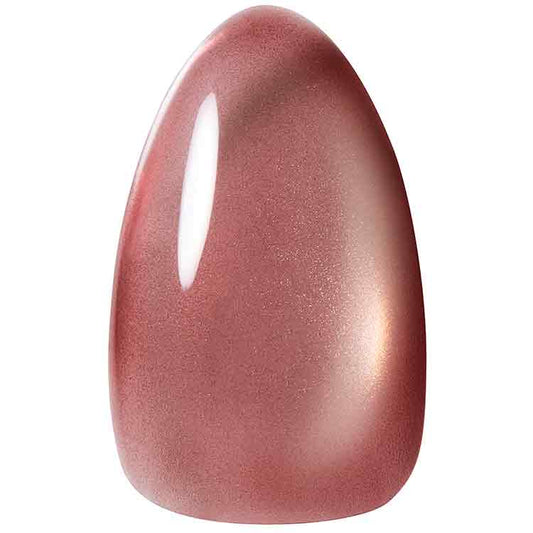
DNKa Cat's Eye Silk Gel Polish 0034 12ml
Vendor:DNKaRegular price $27.95 USDRegular priceSale price $27.95 USD -
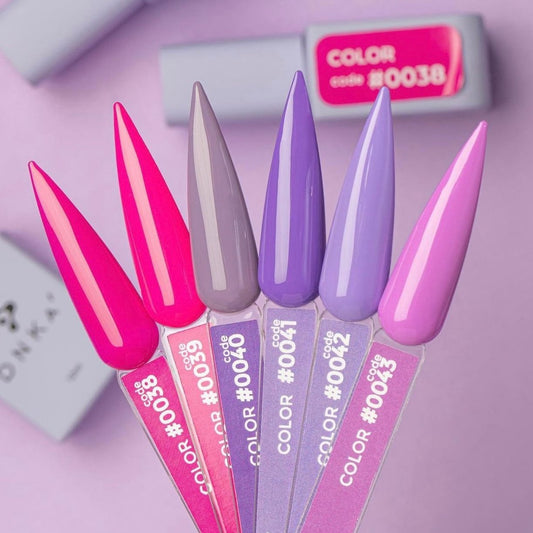
DNKa Gel Polish 0043 High Pigment One Coat 12ml
Vendor:DNKaRegular price $24.95 USDRegular priceSale price $24.95 USD -
Kokoist Terra Magnet TM-49 Bengala Red Magnetic Gel
Vendor:KokoistRegular price $28.95 USDRegular priceSale price $28.95 USD -
Luxio Plush Gel Polish 15ml
Vendor:LuxioRegular price $30.95 USDRegular priceSale price $30.95 USD -
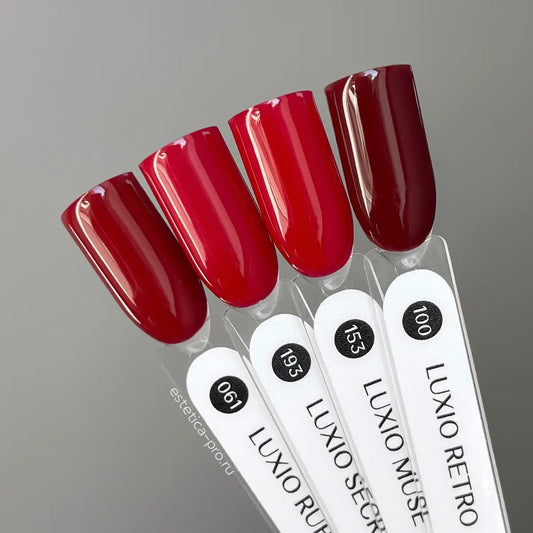
Luxio Secret Gel Polish 15ml
Vendor:LuxioRegular price $30.95 USDRegular priceSale price $30.95 USD -
Luxio Shy Gel Polish 15ml
Vendor:LuxioRegular price $30.95 USDRegular priceSale price $30.95 USD
What leveling actually is
A gel that levels has been formulated with a lower viscosity and a longer working time, so it behaves briefly like a liquid rather than a paste. Left alone for a few seconds it finds its own flat surface. A thicker, non-leveling gel holds whatever shape the brush left, which is why brush strokes and ridges survive into the cure. Neither is better; they are two different handling characteristics, and knowing which is in the bottle tells you how to apply it.
- Give it a few seconds. Fussing with the brush after the coat is down fights the property you paid for.
- Brush strokes vanish on their own. If they are still there, the gel was not a leveling formula or the coat was too thin.
- It flows toward the lowest point. Which is the whole of the good news and the whole of the bad news.
- Curing is not drying. The property behind every one of these behaviors is set out on the gel polish collection page.
Why gel polish peels at the edges
This is the most common problem with the format and it is almost always the same cause. Gel that flows will flow onto the cuticle and into the sidewalls if there is too much of it, and any gel touching skin has nothing to bond to. Skin moves and sheds, so that edge becomes a lift point within days, and once one edge lifts the whole coat starts peeling from there. The color is not at fault and neither is the lamp.
- Leave a visible margin. A hairline of bare nail at the cuticle is the single most effective fix.
- Less product, not a lighter touch. Flooding comes from volume on the brush rather than from pressure.
- Cap the free edge. Running the brush along the tip seals the layer where wear starts.
- Check the sidewalls too. Gel pooling against the skin at the sides lifts for exactly the same reason.
- Preparation decides adhesion. What happens before any color goes on is covered on the nail care page.
Why it stays soft or does not cure
A leveling gel looks smooth at any thickness, which quietly encourages heavy coats. Light has to reach all the way through a layer to cure it, and a thick coat cures at the surface while the material underneath stays soft. The result is a finish that dents under a fingernail, wrinkles when pressed, or peels away in one sheet a day later. Two thin coats cure completely where one thick coat never will.
- Thin coats, twice. This is the answer to almost every cure complaint with a leveling formula.
- A smooth surface hides depth. Because it self-levels, you cannot judge thickness by looking at it.
- Wrinkling means undercured. A surface that creases has cured on top of something still liquid.
- Pigment load matters. Dense colors block more light, so a high pigment gel needs thinner coats than a sheer one.
The sticky layer is two different things
Almost every gel leaves a tacky film after curing, and most of the time that is entirely normal. Oxygen at the surface interferes with the reaction, leaving a thin uncured layer that wipes away with alcohol and is meant to. What is not normal is stickiness that persists after wiping, or softness that goes deeper than the film. That is undercure, and the cause is thickness or lamp time rather than the product.
- A thin tacky film is expected. It wipes off cleanly and the finish underneath is hard.
- Still soft after wiping is not. That is uncured gel, and it means going back to thinner coats.
- Some formulas leave none at all. A no-wipe top coat is formulated to cure through completely.
Guides for Beauty
View all-
How Long Should a Perfume Last?
Perfume that disappears within two hours is one of the most common fragrance frustrations, and it is almost always fixable. This guide breaks down every factor that affects how long...
How Long Should a Perfume Last?
Perfume that disappears within two hours is one of the most common fragrance frustrations, and it is almost always fixable. This guide breaks down every factor that affects how long...
-
What Fragrance Notes Actually Mean
Most people have seen fragrance note lists but few know what they actually mean in practice. This guide explains how top, heart and base notes work, what the most important...
What Fragrance Notes Actually Mean
Most people have seen fragrance note lists but few know what they actually mean in practice. This guide explains how top, heart and base notes work, what the most important...
-
How to Find Your Signature Scent
A signature scent is one of the few elements of personal style that operates below the level of conscious decision-making, leaving an impression before you have said a word. This...
How to Find Your Signature Scent
A signature scent is one of the few elements of personal style that operates below the level of conscious decision-making, leaving an impression before you have said a word. This...
-
Skin First, Makeup Second: Why Minimalist Beauty Is Winning
Minimalist beauty is not a trend. It is a reorientation, driven by a generation that has developed a sophisticated appetite for something more real. This guide makes the case for...
Skin First, Makeup Second: Why Minimalist Beauty Is Winning
Minimalist beauty is not a trend. It is a reorientation, driven by a generation that has developed a sophisticated appetite for something more real. This guide makes the case for...
1
/
of
4