Most people own more jewelry than they wear. This guide explains how to build a collection that actually fits your wardrobe, your lifestyle, and your mornings, covering everyday essentials, layering techniques, and the long-term thinking behind pieces that last.
2546 words,
12 minutes read time.
Last edited .
Most people have more jewelry than they wear. The evidence is usually sitting in a dish on the dresser, or tangled in a drawer, or in a small box that gets opened twice a year when something specific is needed for a specific occasion. Individual pieces that seemed exactly right in the moment of buying them, that made sense under the shop lighting or in the context of a particular outfit, but that have never quite made it into the daily rotation. The collection exists. The wearing does not.
This gap between owning and actually using is one of the more common and quietly frustrating experiences in fashion, and jewelry is where it shows up most consistently. The reasons are layered. Some pieces were bought for occasions that do not come around often enough. Some were gifts that do not quite match personal style. Some were impulse purchases that solved a short-term problem without fitting the longer picture. And some, perhaps most, were bought without a clear sense of what the collection as a whole was supposed to be doing.
Building a jewelry collection you actually wear is a different project from building a jewelry collection. It requires thinking about how you actually dress, what your days actually look like, which pieces complement your existing wardrobe rather than competing with it, and what level of effort you are genuinely willing to put into getting dressed in the morning. It requires some honesty about what has sat unworn and why, and what that reveals about the purchases that were solving the wrong problem. And it requires a framework for making better decisions going forward, not a rigid system but a set of principles clear enough to guide a buying decision before it is made.
Start With How You Actually Dress, Not How You Wish You Dressed
The single most common mistake in building a jewelry collection is buying pieces for an aspirational version of your wardrobe rather than the actual one. A dramatic chandelier earring that would be perfect for the evenings out that happen four times a year. A delicate gold layering necklace that works beautifully with the silk slip dresses that are not, in honest inventory, what you wear most days. A statement cocktail ring sized for a hand that is, in practice, usually typing at a keyboard or carrying a bag. The pieces are not wrong in themselves. They are wrong for the life they are actually being asked to fit into.
The starting point for a collection that gets worn is a clear-eyed look at the clothes you actually reach for. Not the full wardrobe, the active wardrobe: the things that cycle through regular rotation week to week across seasons. What is the general palette? What are the necklines that appear most often? Is the baseline more structured or more relaxed? What is the dress code of most days, and how much does it shift between contexts? The answers to these questions tell you more about what jewelry you need than any trend report or buying guide, because they are specific to you in a way that general advice cannot be.
Necklines are one of the most practical places to start this audit because the relationship between neckline and necklace is one of the most direct in dressing. A crew neck or high neckline leaves almost no space for a necklace to work without competing or disappearing; the jewelry energy for those outfits needs to come from earrings or wrists. A V-neck creates a natural guide for a pendant or a longer chain that follows and extends the line. An open or wide neckline invites layering, or a shorter statement piece that sits within the frame the collar creates. Buying necklaces without knowing which necklines dominate your wardrobe is buying answers to questions you have not asked.
The same logic applies to sleeves and wrists. A wardrobe heavy on long sleeves, worn down through most of the year, means that bracelets disappear for long stretches; the investment there is lower-priority than it might otherwise be. A wardrobe of short sleeves, rolled cuffs, and sleeveless pieces means the wrist is often visible and often part of the visual equation. Rings and earrings are the most wardrobe-agnostic categories because they are rarely obscured by clothing choices, which is part of why they tend to form the backbone of an everyday collection for most people.
The honest wardrobe audit also reveals the color story of your existing pieces, which matters more for jewelry than people often anticipate. A wardrobe dominated by cool-toned neutrals, blacks, greys, and navy, tends to work more naturally with silver-toned metals. A wardrobe of warm neutrals, camel, cream, rust, and olive, tends to harmonize better with gold. Neither is a rule, and mixing metals has become entirely standard practice, but understanding which direction your wardrobe already leans helps you make choices that integrate rather than create visual tension. A jewelry collection that fights with your clothes is a jewelry collection that stays in the drawer.
The Everyday Pieces: What a Working Collection Actually Needs
Once the wardrobe context is clear, the question becomes which specific categories of jewelry need to be covered to handle the full range of what a typical week actually contains. The answer for most people is simpler than the jewelry industry's marketing would suggest. A working everyday collection does not require comprehensive coverage of every category at multiple price points. It requires depth in the categories that matter most for your specific life and deliberate choices that can move between contexts without needing to be changed.
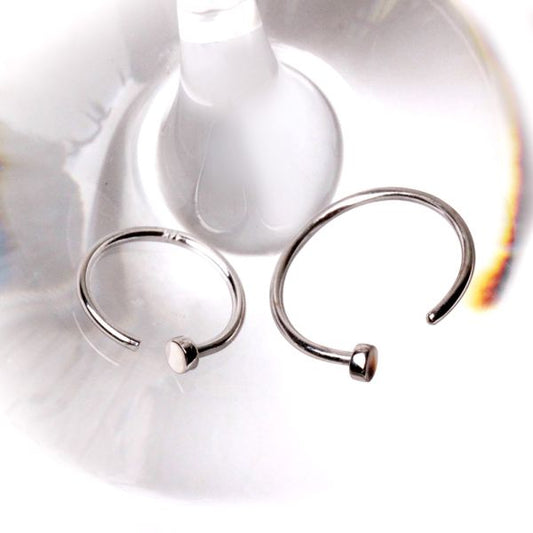
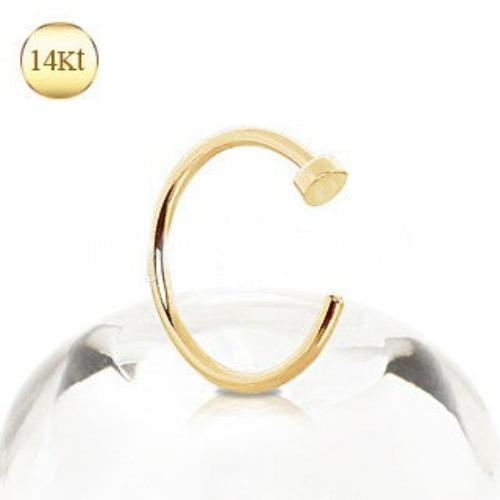
Earrings are for most people the highest-frequency jewelry category, and the reason is simple: they are fast to put on, they do not interact with clothing in complicated ways, and even a small pair reads as intentional and finished in a way that a bare ear often does not. The foundation of a working earring collection is a small stud or simple hoop that is comfortable enough to wear all day, appropriate for almost any context, and easy enough to put on that it happens automatically rather than as a deliberate decision. This is the piece that earns its place by being worn three hundred days a year rather than by being remarkable on any single occasion. Once that foundation is in place, a slightly more interesting pair, something with a drop or a distinctive shape, handles the days when the outfit or context calls for a little more.
Necklaces are where most people have the most complicated relationship with their jewelry collection, because the category has the most variables. Length, weight, chain style, pendant versus plain, layering potential: each of these interacts with the wardrobe in specific ways and the wrong combination does not work at all. The most versatile starting point is a medium-length chain, sitting somewhere between a choker and a longer pendant, in the metal tone that suits your wardrobe better. This length works across the widest range of necklines, transitions from casual to polished without effort, and serves as the anchor if you decide to layer. A second necklace, either shorter or longer, creates the layering possibility without requiring a third or fourth piece to make it look intentional. Two necklaces at contrasting lengths, worn together with intention, is a complete look that requires no further development.
Rings are the category where personal expression tends to be strongest and where the everyday collection is most individual. Some people wear nothing on their hands; some wear a ring on every finger. The most practical observation is that rings worn daily need to be comfortable in a functional sense, which means they need to work alongside whatever the hands are actually doing: typing, cooking, carrying, creating. A delicate band that sits flush against the finger tends to be the most liveable everyday option. A statement ring, wider or more architectural in design, is better suited to the days or contexts when the hands are not doing heavy practical work. The error is buying statement rings for everyday wear and then never wearing them because they are impractical, rather than treating them as the occasional-use pieces they actually are.
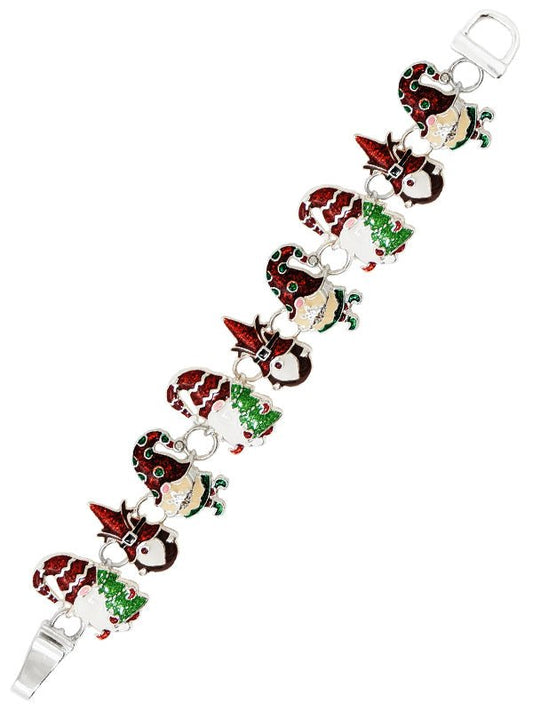
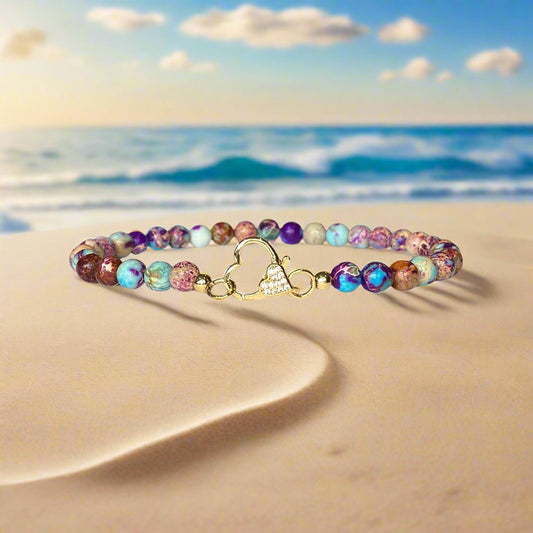
Bracelets complete the wrist equation and work best when they are thought of as a category with different sub-roles. A fine chain bracelet worn alone or stacked with one or two others reads as delicate and deliberate. A wider cuff or a more substantial piece reads as a singular statement. A collection that has one of each covers the full range from minimal to expressive without requiring a large number of pieces. The practical consideration for bracelets, as mentioned in the wardrobe section, is how often the wrist is actually visible; if it is consistently covered, investing heavily in bracelets before earrings or rings is a sequencing mistake.
Layering and Stacking: The Skill That Makes a Small Collection Feel Larger
One of the most valuable skills in building a collection you actually wear is learning how to combine pieces with confidence, because a small number of well-chosen items that can be worn in multiple configurations is worth considerably more than a larger collection of isolated pieces that only work individually. Layering necklaces and stacking rings and bracelets is not a complicated technique, but it does benefit from understanding a few principles that separate combinations that look considered from combinations that look chaotic.
The foundational principle of layering is contrast. Two necklaces of identical length and weight worn together tend to tangle and read as one confused piece rather than two deliberate ones. Two necklaces at meaningfully different lengths, with different weights or textures, read as a composition. The contrast does not need to be dramatic; it needs to be sufficient for the eye to register that two distinct pieces are present and that their relationship to each other was intentional. A fine chain at collarbone length paired with a pendant at mid-chest, for example, creates clear layering without effort or expertise.
The same principle applies to ring stacking, where the variables are finger placement and proportion rather than length. Rings on different fingers of the same hand can span a wide range of styles because the spatial separation makes them individual statements rather than a combined one. Rings on the same finger, stacked against each other, need more careful consideration: two very similar rings stack awkwardly, while a thin plain band paired with a slightly more textured or wider band creates a deliberate combination. The stacking rule that rarely fails is one plain with one detailed, on the same finger, in the same metal family.
Mixing metals is worth addressing directly because it is one of the areas where people often hesitate unnecessarily. The idea that gold and silver cannot be worn together is a style rule from a period when matchy-matchy coordination was the standard and it has not been the prevailing standard for years. Mixed metals worn together work when the mixing is intentional rather than accidental. Intentional means choosing pieces in different metals and wearing them together as a considered combination. Accidental means wearing whatever individual pieces happen to be available without thinking about how they relate. The difference between those two things is not the metals themselves; it is the awareness brought to the combination.
The practical skill of layering also applies to the relationship between jewelry and clothing. A heavily embellished top or a high neckline already has visual activity at the neck and shoulders; adding a necklace introduces competition rather than enhancement. A plain, simple top is a better canvas for necklace layering precisely because it creates no competition. The jewelry and the clothing are always in a visual relationship, and understanding that relationship, rather than treating them as independent decisions, is what makes getting dressed feel coherent rather than assembled.
Quality, Care, and the Long-Term Thinking Behind a Collection That Lasts
Building a jewelry collection you actually wear is partly a question of selection and partly a question of how well the pieces hold up over time and how easy they are to maintain. A piece that tarnishes quickly, that requires careful storage to stay in good condition, or that becomes uncomfortable after a few wearings will stop being worn regardless of how much it suited the wardrobe at the point of purchase. The long-term thinking behind a working collection is about choosing pieces whose quality matches the frequency with which they will be used.
For everyday pieces, the material consideration matters more than it does for occasional-use jewelry. Pieces worn daily encounter sweat, water, friction, and the general physical demands of a full day in a way that a necklace worn to a dinner twice a year does not. Sterling silver and gold-plated pieces both perform well as everyday materials when they are well made, but they reward slightly different care habits. Sterling silver develops a natural patina over time that many people find appealing; it can also be polished back to a brighter finish with minimal effort. Gold-plated pieces maintain their color best when kept away from water, perfume, and harsh products, and when stored separately to avoid scratching.
The care habit that makes the biggest difference to the longevity of any jewelry collection is also the simplest: taking pieces off before activities that will expose them to chemicals, prolonged water contact, or heavy physical wear, and putting them on as a final step when getting dressed rather than before applying skincare, fragrance, or hairspray. These products are the most common cause of dulling and discoloration in everyday jewelry, and the habit of putting jewelry on last costs nothing and extends the life of every piece significantly.
Storage matters more than most casual jewelry owners give it credit for. Pieces stored in a tangled pile damage each other over time, with harder stones scratching softer metals and chains developing kinks that weaken them. Individual compartments, or at minimum a flat surface where pieces lie separately rather than on top of each other, is the minimum for a collection that stays in good condition. For pieces worn less frequently, a small pouch or a closed box prevents the surface oxidation that comes from prolonged air exposure and keeps everything in the condition it was in when last worn.
The buying mindset that supports a lasting collection is one that prioritizes deliberate choices over frequent ones. A smaller number of pieces chosen with clear criteria, that fit the wardrobe, that suit the lifestyle, that are made to a standard that supports regular wear, will serve better over time than a larger collection assembled without that filter. This is not an argument for spending more on every piece; it is an argument for spending thoughtfully, which sometimes means spending more on the pieces that will be worn daily and less on the occasional-use pieces that do not need to survive daily friction.
The goal of a jewelry collection, at its most useful, is not to have options for every possible occasion. It is to have the right pieces for the life you actually live, worn consistently enough that they become part of how you present yourself rather than accessories you reach for occasionally. Getting there is a process of editing and intentional addition rather than accumulation, and it produces a collection that is smaller than most people's current one and more worn than any of them. That is the collection worth building.
The school year ends, the days lose their shape, and devices quietly fill the gap. Very few parents choose this; it simply happens because reaching for a screen is easier...
The school year ends, the days lose their shape, and devices quietly fill the gap. Very few parents choose this; it simply happens because reaching for a screen is easier...
Every room has a rhythm that drifts out of sync when the weather turns. Suddenly the space feels heavier or darker than it should, and the urge is to change...
Every room has a rhythm that drifts out of sync when the weather turns. Suddenly the space feels heavier or darker than it should, and the urge is to change...
A packed closet and nothing to wear is a coherence problem, not a shortage one. A capsule wardrobe fixes it with a smaller set of pieces that all work together,...
A packed closet and nothing to wear is a coherence problem, not a shortage one. A capsule wardrobe fixes it with a smaller set of pieces that all work together,...
Shoes take more physical stress than almost anything else you wear, and a poorly made pair shows it fast. This guide covers what actually matters when buying footwear built to...
Shoes take more physical stress than almost anything else you wear, and a poorly made pair shows it fast. This guide covers what actually matters when buying footwear built to...